
PREPARING FILES FOR PRINTING
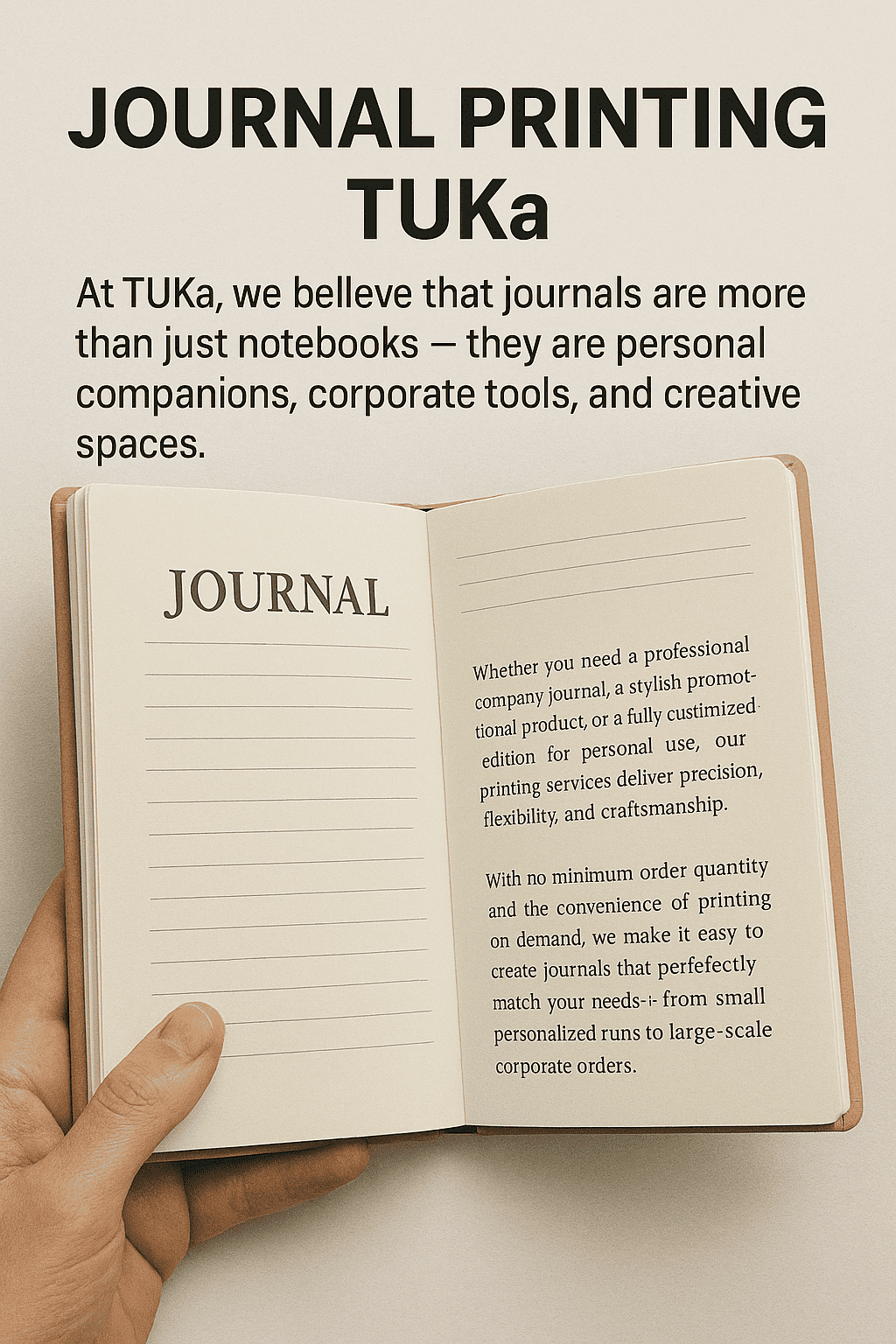
Are you planning to have your printing done at the TUKa printing house? To ensure that the final result meets your expectations and that the production process runs smoothly, we have prepared a list of basic rules. A properly prepared PDF file is a guarantee of the highest quality.
Basic requirements for files
Format. Only PDF files are accepted (recommended PDF/X standard: from PDF/X-1 to PDF/X-4).
File names. Names must clearly indicate the purpose, for example: manozurnalas_virselis.pdf or manozurnalas_vidus.pdf.
Page layout. Files must be submitted as separate pages, not spreads. The PDF file must contain both sides of the page, even if one of them is blank.
Technical parameters for high-quality printing
1. Bleeds and safe zone
Bleeds are necessary if the image or background extends to the edge of the product.
The standard size is 3 mm from the cut line.
Safe zone: important elements (text, logos) must be at least 3–5 mm away from the cutting edge.
Glued publications: on the inside (near the spine), the safe zone should be larger – about 10 mm.
2. Colors and profiles
Color space: use only CMYK or Grayscale color systems. RGB objects will be converted automatically, so colors may change.
Color profiles: for coated paper, we recommend PSO Coated V3 (Fogra51), for offset paper – PSO Uncoated V3 (Fogra52). If in doubt, use the standard Coated Fogra 39.
Black color: for rich black, use a composition such as C50 M40 Y30 K100. For small text, use only 100% Black.
3. Resolution and Fonts
Image quality: recommended resolution is 300–350 dpi. A resolution lower than 150 dpi may result in poor print quality.
Fonts: all fonts must be embedded in the PDF file or converted to outlines.
Special finishes (UV varnish, foil, die cutting)
If your order requires UV varnishing, foiling, or die cutting:
- Prepare separate PDF files for these processes, with dimensions matching the main file.
- Finishing objects must be filled with 100% black.
- We do not recommend applying finishes to text smaller than 6 pt or lines thinner than 0.1 mm.
Do you have any questions? Contact the TUKa team – we will help you determine the spine width or select the most suitable color profile for your publication.